 Warning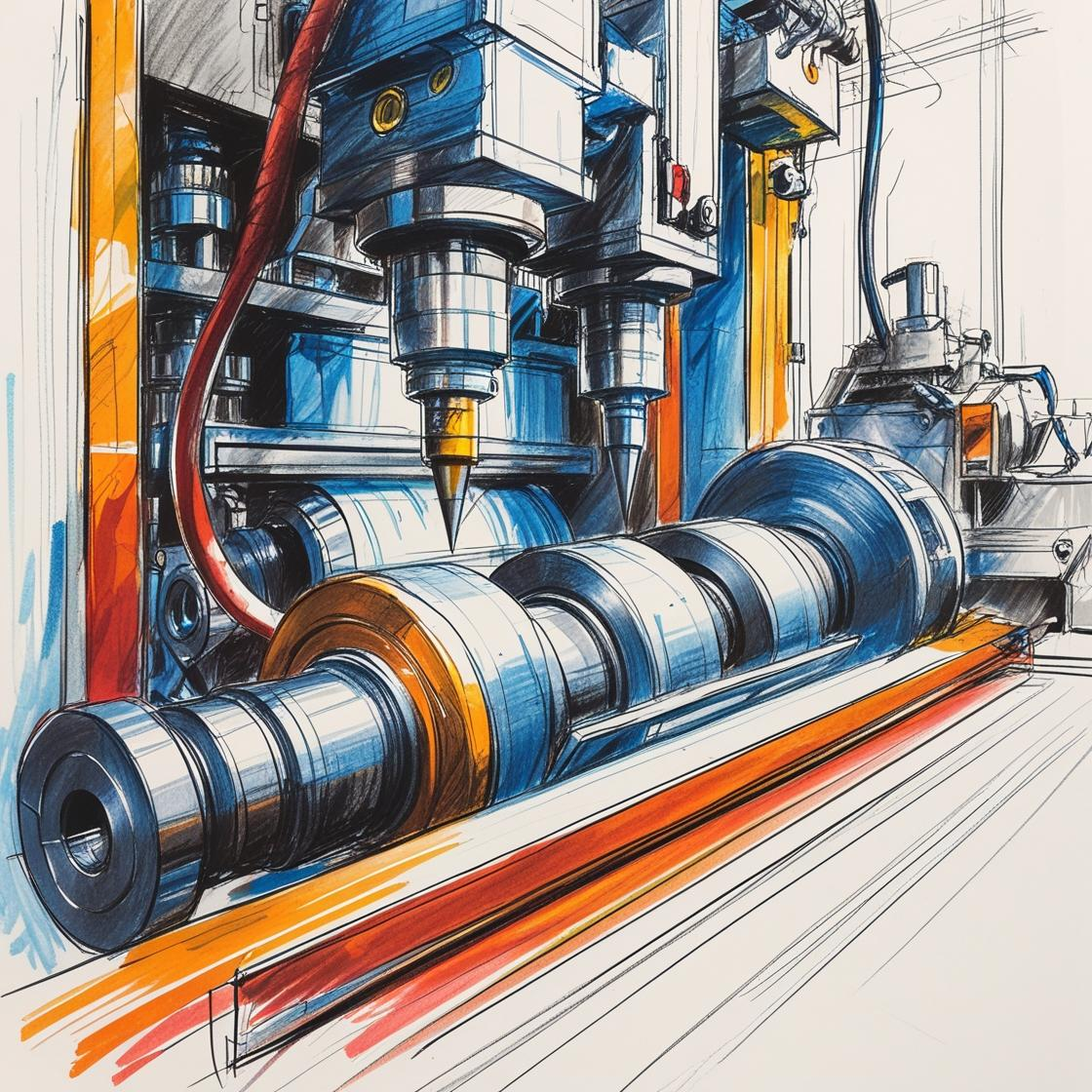
Blog
Prototyping is a pivotal process in modern product development, bridging the gap between concept and reality. It involves creating a preliminary model or sample of a product—a tangible representation of an idea that designers and engineers can test and refine. According to CorporateVision-News, the global prototyping market reached $490 million in 2022 and is projected to grow to $1.2 billion by 2028, underscoring the rising importance of prototyping across industries. Companies are investing in prototyping because it drives innovation, reduces time-to-market, and helps ensure that final products meet both functional and user expectations.
Modern prototyping techniques have dramatically accelerated the product development timeline. Traditionally, building a prototype and iterating on a design could take weeks or months, but today this process can be condensed to mere days. By leveraging methods such as additive manufacturing (3D Printing) and high-speed CNC machining, engineers can quickly test form and function, then refine their designs in rapid succession. This agility allows businesses to identify design flaws early and incorporate feedback faster, resulting in better solutions and fewer costly changes down the line.
Equally important, prototyping yields significant cost savings and quality improvements over the course of development. Early prototype testing catches issues before full production, avoiding expensive rework by correcting problems when they are easiest to fix. Iterating through prototypes also leads to higher product quality and user satisfaction, as designs are optimized through real-world feedback and usage trials.
Furthermore, the act of creating prototypes fosters more transparent communication among cross-functional teams and stakeholders—a physical model makes it far easier to discuss ideas and requirements than abstract drawings, ensuring everyone shares the same vision. In the sections that follow, we will explore what prototyping entails, the various forms and methods it can take, its role in different industries, and best practices for leveraging prototyping to bring innovative products to market swiftly and successfully.
What is Prototyping?
In product development, prototyping is widely regarded as a vital step that must not be overlooked, because it provides the opportunity to test and improve a design before full-scale manufacturing. Generally, prototypes are tangible representations of an idea—for example, models of a concept built to validate design assumptions, test usability, and demonstrate feasibility. In other words, a prototype is an initial version of a product that allows designers, engineers, and stakeholders to interact with the concept, identify potential issues, and make improvements early on. A well-crafted prototype acts as a proof of concept, showing that the idea can work in practice and guiding the development team toward a successful final product.
Historically, however, prototyping was often a slow and costly bottleneck in the development process. Engineers might craft makeshift models by hand for proof-of-concept, but producing fully functional prototypes or production-quality parts required using the same processes and tooling as final manufacturing. Traditional methods like custom molding or machining involved expensive setups and could make low-volume prototypes prohibitively costly and time-consuming. This meant companies had to invest heavily and wait longer to test their designs, which in turn slowed innovation.
Today, modern techniques have removed many of those barriers. Rapid prototyping methods (notably digital fabrication technologies) help companies quickly turn ideas into realistic models and then into high-fidelity prototypes that look and work like the real product. Designers and engineers can go straight from a CAD digital design to a physical prototype faster than ever, and then execute quick, frequent revisions based on testing and feedback.
The result is an iterative development cycle where each prototype brings the product closer to the final vision in a fraction of the time previously required. Prototyping can take many forms depending on the stage of development—from rough conceptual mockups to near-production replicas—but at every level, the purpose is the same: to learn from a tangible model and refine the design before committing to mass production.
Stages and Types of Prototypes
As a project progresses, prototypes evolve from rudimentary models to refined pre-production units. In practice, prototypes can range from simple mockups and sketches to fully functional models, depending on the needs of the project. Some common categories of prototypes include:
Proof-of-Concept (PoC) Prototype
A PoC prototype is a basic model created to verify the feasibility of a new idea or a specific aspect of the design. It’s often focused on proving that a particular technology, mechanism, or approach will work beforeinvesting significant resources. PoC prototypes are usually low-fidelity and may not look like the final product – they prioritize core functionality over appearance. The goal is to answer the question, “Will this concept actually work in real life?” as early as possible in development.
Visual or Form Prototype
Also known as an aesthetic prototype or industrial design mockup, a visual prototype demonstrates the appearance, shape, and ergonomic feel of the product, without necessarily having full functionality. These prototypes are used to evaluate styling, dimensions, and user interaction. A visual model is often made from easy-to-shape materials or 3D prints and painted/finished to look like the envisioned product. It helps ensure the design is attractive and user-friendly before finalizing details.
Functional Prototype
A functional prototype is built to operate as the final product would, at least in core features. It closely resembles the final product’s functionality and is used to test whether all the parts, mechanisms, and electronics work together as intended. Functional prototypes may be made with materials or manufacturing methods different from the eventual product and might not have the polish of the final unit. The emphasis is on validating engineering aspects—does a machine perform at the required specifications? Does an electronic circuit function reliably under real conditions?
High-Fidelity or Pilot Prototype
By the later stages of development, teams create prototypes that are very close to the production design in both form and function. A high-fidelity prototype uses materials, components, and manufacturing processes similar to those planned for the final product, yielding a unit that looks and works like the real thing. These prototypes (sometimes called alpha/beta prototypes or pilot builds) are used for rigorous final testing, verifying performance against specifications, getting certifications, and even limited user trials. A pilot prototype helps uncover any last issues in manufacturing or usability and gives confidence that the product will succeed in mass production.
It’s worth noting that these categories aren’t strictly separate for every project. Many prototypes are hybrids – for instance, a single unit might have a 3D-printed body (visual) with some working internals (functional). Teams often iterate through these stages, starting with rough proofs of concept and gradually increasing fidelity as the design solidifies.
Prototyping Methods and Technologies
Engineers use a variety of fabrication methods to create prototypes—additive, subtractive, and sometimes formative techniques. Below are two widely used approaches and other tools to turn ideas into reality.
An extensive industrial 3D printing system constructs a prototype component layer by layer. Additive manufacturing provides almost unlimited form freedom and doesn’t require custom tooling, allowing engineers to fabricate complex shapes rapidly and cost-effectively.
Additive Manufacturing (3D Printing):
In the last decade, 3D Printing has revolutionized prototyping. Additive manufacturing builds parts layer by layer directly from digital files, so within hours a design on a computer can become a physical object. It excels at complex geometries (lattices, internal channels, organic shapes) and requires no special tooling. Desktop printers enable cheap early models; advanced printers produce high-resolution or functional nylon/metal parts. Fast iteration—tweak CAD and print overnight—compresses weeks into days.
Subtractive Manufacturing (CNC Machining):
CNC machining is a prototyping cornerstone for metal or high-accuracy parts. Computer-controlled tools cut away material to form precise shapes. It yields real-material prototypes for rigorous testing, excellent surface finish, and threads. It can be more expensive per part than Printing, but for critical components theprecision, material fidelity, and reliability are indispensable.
A robust prototyping approach often combines both subtractive and additive methods: print a complex housing, CNC machine the load-bearing brackets. Choose per-part based on speed, cost, and performance.
Other Prototyping Tools:
Laser cutting for flat parts and enclosures; vacuum casting/soft tooling for small plastic batches without hard tooling; sheet metal fabrication for housings/brackets; PCB prototyping via quick-turn boards; and 3D virtual prototyping (FEA/CFD) to reduce physical iterations.
Applications of Prototyping Across Industries
Consumer Products & Electronics:
Multiple rounds of prototypes balance form and function, refine UX, and gather user/stakeholder feedback.
Automotive & Aerospace:
Concept cars/clay models, alpha/beta builds, pilot runs, and structural/aero testing; stringent standards demand physical proof alongside simulation.
Medical Devices & Healthcare:
Iterative prototyping is mandatory for safety and compliance; includes biocompatibility/sterilization testing and patient-specific anatomical models for surgical planning.
Challenges and Best Practices in Prototyping
Common challenges: time/resource constraints, balancing fidelity and effort, tunnel vision,ethical/regulatory concerns, and cultural barriers to iteration.
- Define Clear Objectives: Know exactly what each prototype must prove.
- Start Simple, Increase Fidelity: Build only what’s needed to answer the current question.
- Prototype Risky Elements First: Tackle novel/high-risk components early.
- Involve End-Users and Stakeholders: Real feedback prevents false assumptions.
- Iterate Quickly and Integrate Feedback: Rapid cycles; document findings; stay flexible.
- Mind the Transition to Production: Engage manufacturing; treat late prototypes as a production rehearsal.
Choosing the Right Prototyping Partner
- Comprehensive Capabilities: One-stop shop across CNC, 3D Printing, PCB, assembly.
- Speed and Flexibility: Quick turn without sacrificing quality; handle revisions.
- Quality and Precision: Robust QA, appropriate tolerances/certifications.
- Communication and Collaboration: Clear updates, single point of contact, NDA-friendly.
- Cost-Effectiveness: Transparent pricing; design/process optimizations to save cost.
- Experience and Portfolio: Relevant domain experience; proven with demanding industries.
- From Prototype to Production Support: Ability to carry into bridge/pilot production.
Future Trends in Prototyping
Virtual Prototyping with VR/AR:
VR immerses teams in full-scale models pre-fabrication; AR overlays digital prototypes in real environments for faster, interactive iteration.
AI-Driven Design and Prototyping Automation:
Generative design explores broader design spaces; automation and data-driven loops shorten cycles and predict next steps.
Materials and Sustainability Innovations:
Eco-friendly materials, reusable/reformable prototypes, virtual prototyping to cut waste, and distributed/local fabrication to reduce shipping.
Higher Fidelity, Faster Than Ever:
Faster, multi-material 3D printers and automated CNC deliver near-production fidelity in days, blurring prototype vs production.
Prototyping remains a strategic asset—learning by building—and is only becoming more immersive, intelligent, and efficient.